Thinking about buying your first small multifamily property in South Florida? You are not alone, and you are not early to the story. Demand for rentals remains meaningful across Miami-Dade, Broward, and Palm Beach, but this is also a market where supply, insurance, and operations can quickly separate a disciplined deal from an expensive lesson. This guide will help you think through where to look, what to buy, and how to build a small portfolio with a clear plan to source, operate, and eventually exit. Let’s dive in.
Why South Florida Still Works
South Florida remains a large renter market backed by scale and continued population growth. Census QuickFacts estimates show about 2.84 million residents in Miami-Dade, 2.04 million in Broward, and 1.58 million in Palm Beach. Since 2020, population growth has been 5.1% in Miami-Dade, 4.8% in Broward, and 6.0% in Palm Beach.
That matters because population growth can support long-term housing demand, especially in rental-heavy counties. Miami-Dade is the most renter-oriented of the three, with a 52.2% owner-occupied rate, compared with 63.6% in Broward and 70.1% in Palm Beach. In simple terms, the renter base is deepest in Miami-Dade, while Broward and Palm Beach can offer different demand and pricing dynamics.
Affordability also supports the rental thesis. Median owner-occupied home values are $463,000 in Miami-Dade, $414,600 in Broward, and $447,300 in Palm Beach, while median household incomes are $71,753, $77,633, and $83,581 respectively. Those figures point to a meaningful gap between renting and owning, especially in Miami-Dade.
What Small Multifamily Means Here
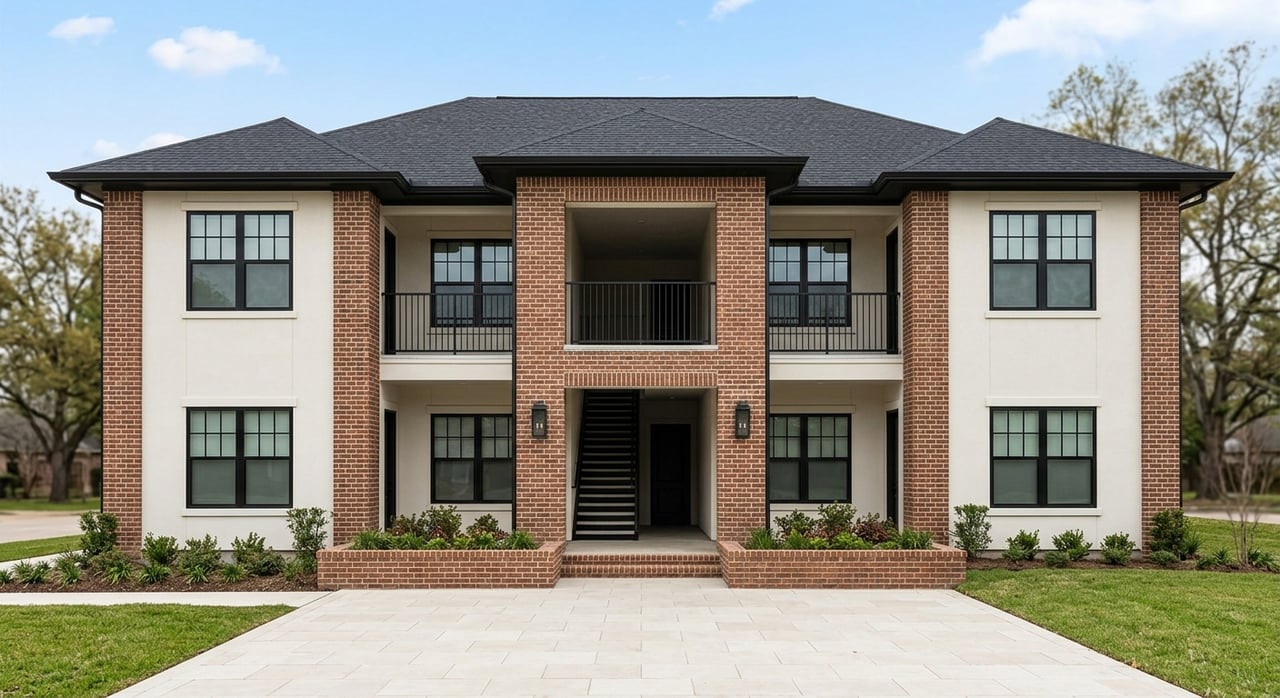
In this market, the best fit for a small portfolio is often a 2-20 unit low-rise or garden-style building. These properties can be easier to understand operationally than larger assets, while still giving you room to improve income through better management, maintenance, and selective renovations.
Right now, the cycle favors deals with a believable operational story. That means the upside should come from cleaner management, more responsive maintenance, tighter documentation, and practical unit upgrades, not from assuming aggressive rent growth will solve a weak basis.
This is an important distinction in South Florida. CBRE reported a record 16,389 multifamily units delivered in 2024, and vacancy moved unevenly across the region. Miami-Dade vacancy declined from 5.8% to 5.6%, while Broward rose from 6.9% to 7.7% and Palm Beach rose from 7.9% to 8.9%.
Picking the Right County
Miami-Dade: Strongest Renter Base
Miami-Dade is the most structurally renter-oriented county in the tri-county area. It also has larger households at 2.76 persons per household, compared with 2.60 in Broward and 2.49 in Palm Beach.
For a small multifamily investor, that can support infill, transit-adjacent, and workforce-oriented assets. It also raises the bar for execution. If you buy in Miami-Dade, your income can depend heavily on tight tenant communication, fast maintenance response, and disciplined documentation.
Broward: Practical Middle Ground
Broward often works well as a middle ground between renter intensity and ownership stability. It can be attractive if you want liquidity and a broader buyer pool on the back end.
That exit story matters. CBRE reported Broward multifamily sale activity rose 52% in 2024 to nearly $1.8 billion. If your property is cleanly underwritten and well operated, that can support more options when it is time to sell.
Palm Beach: More Selective Buying
Palm Beach has the highest median household income of the three counties at $83,581 and the highest owner-occupied rate at 70.1%. That can make it attractive for higher-quality or more selective acquisitions.
At the same time, your buy box likely needs to be tighter. CBRE reported 2024 multifamily sale activity in Palm Beach rose 92% to almost $1.1 billion, which supports investor interest, but this is not a county where loose renovation assumptions or thin margins leave much room for error.
Build Your Portfolio Around Operations
A small multifamily portfolio is not just a buying strategy. It is an operating business. In South Florida, one deferred roof issue, one rough turnover cycle, or one insurance increase can erase the spread you thought you had at acquisition.
That is why many of the most resilient deals in this cycle are the ones with modest, controllable upside. If you can improve collections, standardize notices, tighten maintenance workflows, document repairs, and complete selective upgrades, you have a clearer path to protecting NOI.
For small buildings, this often looks like:
- Improving rent collection systems
- Reducing make-ready time between tenants
- Addressing deferred maintenance early
- Upgrading units selectively instead of fully gutting them
- Keeping complete records for leases, notices, repairs, and capital work
A disciplined operating plan can matter more than a flashy renovation budget. In a 2-20 unit building, small mistakes are not spread across hundreds of units. You feel them quickly.
Underwrite Conservatively
South Florida is still attracting capital, but your numbers need to work under tighter assumptions. CBRE’s Q2 2025 underwriting survey showed average core going-in cap rates of 4.75% and average exit cap rates of 4.96%, and Miami was one of the markets where core-asset IRR targets increased.
For you, that supports a more conservative model. It is wise to use modest leverage, realistic renovation timelines, and an exit cap that does not depend on the market becoming easier by the time you sell.
A good small multifamily underwriting model should answer a few basic questions:
- Does the deal still work if financing stays tight?
- Can the property carry higher insurance costs?
- Is the renovation scope manageable for the loan size?
- Does the exit still make sense if your sale timing slips?
- Is the upside based on operations you can actually control?
If the answer to any of those is no, it may not be the right first or next acquisition.
Treat Insurance and Flood Risk First
In South Florida, insurance is not a minor line item. It is a core part of the investment case. CBRE found that rising insurance costs reduced Florida multifamily property values by 6.8% since Q4 2019.
Climate exposure also needs to be reviewed early. NOAA says Florida’s coastal communities face sea-level rise, coastal flooding, erosion, and storms, and FEMA identifies its Flood Map Service Center as the official public source for flood hazard information.
Before you get too far into a deal, make sure you:
- Check flood zone status early
- Stress test insurance expense
- Budget for storm-hardening items where needed
- Review drainage conditions and water management issues
- Reserve for capital work tied to weather exposure
These checks can save you from buying a property that looks good on paper but struggles under real operating costs.
Know the Florida Rules That Affect NOI
Florida landlord-tenant law directly affects how you operate small multifamily assets. State law generally prohibits local rent controls, requires a 3-day notice for nonpayment of rent, allows month-to-month termination on 30 days’ notice, requires reasonable notice for repairs and access, and requires a separate flood-risk disclosure for residential leases of one year or longer.
These rules do not make investing harder by default. They simply reward owners who have clean systems and consistent documentation. If your processes are casual, you can create delays, confusion, or compliance issues that hurt both operations and tenant experience.
For a growing portfolio, that usually means having a repeatable workflow for:
- Lease documentation
- Rent notices
- Access notices
- Repair tracking
- Tenant communication
- Flood-risk disclosure where required
Why the Source-Operate-Exit Model Matters
In South Florida, execution drift is one of the biggest risks in small multifamily investing. Buying the asset is only one step. You also need to manage insurance, coordinate capex, respond to tenants, follow state notice rules, and prepare the property for eventual sale.
That is where an integrated approach can create real value. When sourcing, underwriting, management, and disposition are aligned, you reduce handoff risk and make it easier to scale with fewer surprises.
For example, the same discipline that helps you buy right also helps you sell better later. Clear income history, documented capital work, code-compliant improvements, and a well-run operation can make a property easier to diligence and finance for the next buyer.
That exit story still matters in this market. CBRE’s 2025 investor survey continued to rank Miami and South Florida among preferred U.S. investment markets, and sale activity in Broward and Palm Beach increased sharply in 2024.
A Practical Small Portfolio Strategy
If you are building a small multifamily portfolio in South Florida, a practical strategy often looks like this:
- Pick one county first based on your risk tolerance, budget, and operating plan.
- Focus on 2-20 unit assets with functional layouts and manageable capex.
- Underwrite for stability rather than fast rent growth.
- Review flood and insurance exposure early before spending too much time on the deal.
- Create repeatable management systems for leasing, notices, maintenance, and reporting.
- Document everything so the asset is easier to refinance or sell.
This kind of portfolio is rarely built by chasing headlines. It is usually built by making a series of disciplined decisions that protect downside while creating steady operational upside.
If you want to build in South Florida, the opportunity is still there. The key is to stay local, stay conservative, and treat operations as seriously as acquisition. If you want a partner-led approach that combines disciplined underwriting, white-glove management, and a clear source-to-exit strategy, connect with Ryan Brant.
FAQs
What is considered small multifamily in South Florida?
- In this market, small multifamily usually means a 2-20 unit low-rise or garden-style building with manageable operations and a realistic value-add plan.
Which South Florida county is best for a first small multifamily property?
- It depends on your goals. Miami-Dade has the deepest renter base, Broward can offer a practical middle ground, and Palm Beach may suit a more selective acquisition strategy.
Why is insurance so important for South Florida multifamily investing?
- Rising insurance costs have affected property values in Florida, so insurance should be treated as a first-order underwriting item rather than a secondary expense.
How should you underwrite a small multifamily deal in South Florida today?
- A disciplined model should use conservative exit assumptions, modest leverage, realistic capex, and stress tests for insurance, timing, and operating risk.
What Florida lease rules matter for small multifamily owners?
- Key rules include a 3-day notice for nonpayment, 30 days’ notice for month-to-month termination, reasonable notice for repairs and access, and flood-risk disclosure for certain residential leases.
Why does an integrated operating model help with a small portfolio?
- In 2-20 unit deals, small mistakes can have an outsized impact, so aligning sourcing, underwriting, management, and exit planning can reduce execution risk and support cleaner results.