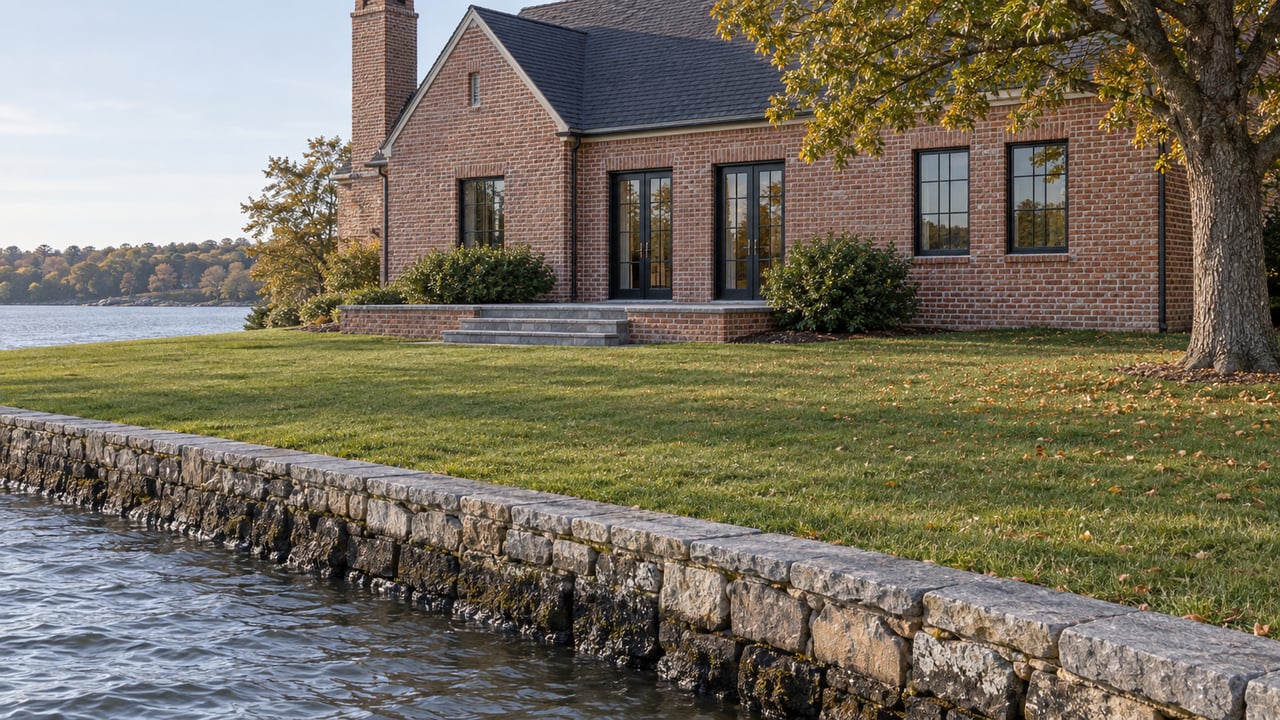
In March 2026, Annapolis Mayor Jared Littmann took a phone call from a member of Maryland's congressional delegation. The question, as Littmann later described it, was blunt: "Are you sitting down?" The news was good. A $35 million federal grant, the last piece needed to fund the city's $87.8 million City Dock Resiliency Project, had come through.
A few weeks later, inside the State House less than a mile from City Dock, the General Assembly passed a law that sounds like it belongs to a different timeline entirely. House Bill 200 gives Maryland home sellers until July 1, 2027 before they're required to hand buyers a state-designed flood risk disclosure form, and, where one exists, a FEMA elevation certificate. Read on its own, that date looks like breathing room. Talk to anyone closing a waterfront deal in Eastport, Murray Hill, or along the Severn this year, and a different picture shows up. The paperwork buyers, lenders, and insurers are already asking for is the same paperwork the statute will eventually require by law. The deadline that matters isn't 2027. It's whenever the listing goes live.
What HB 200 Actually Changes
The statute itself is narrow. It standardizes a form and sets a date. Before July 1, 2027, a Maryland seller has no legal obligation to hand a buyer a state flood disclosure document or an elevation certificate as part of the transaction.
What the law doesn't do is create the underlying scrutiny. Lenders already ask whether a property sits in a Special Flood Hazard Area before they'll close a mortgage. Insurers already price a policy based on elevation, proximity to water, and prior claims history. Buyers' attorneys representing anyone purchasing on Spa Creek or the Severn already request permit history for docks, piers, and bulkheads as a matter of course, because that history determines whether a structure was built as an in-kind repair or new construction, and that distinction affects both permitting exposure and insurance underwriting. None of this waits for a state form. It's already how waterfront deals in Annapolis get closed.
Why the City Isn't Waiting Either
The clearest evidence that flooding is an active concern in Annapolis right now, not a 2027 concern, sits a short walk from City Dock. The $87.8 million City Dock Resiliency Project broke ground in November 2025. The old Harbormaster building came down that December, and utility and electrical work continued into this year. The project is funded through a combination of the FEMA grant confirmed in that March phone call, Anne Arundel County, the State of Maryland, city bonds, and a concession agreement tied to a municipal parking garage.
A separate $21 million effort along Compromise Street, budgeted apart from the main City Dock project, is building a new bulkhead and adding a deployable barrier on top of the existing one specifically to reduce flooding around Ego Alley. Even smaller public projects carry the same layered financing. The city recently completed an ADA-accessible floating dock in Eastport at a cost of $440,000, assembled from a $350,000 grant through Maryland's Department of Natural Resources State Waterway Improvement program, $65,000 in city bonds, and $25,000 in capital reserves.
If a single publicly funded dock needs that many layers of approval and money to reach completion, a private bulkhead replacement on a residential lot isn't moving any faster. Annapolis is spending nearly $110 million across these combined projects to address flooding before the state's own disclosure statute takes effect. That timing tells sellers something the calendar doesn't: the city already treats this as solved for, not scheduled for.
The Eastport Market Doesn't Move as One Price
The disclosure question matters more in some pockets of Annapolis than others, and Eastport is the clearest example of why a single median price tells a seller almost nothing about their own property.
As of early 2026, non-waterfront Craftsman-style cottages and Cape Cods in Eastport were trading in the $600,000 to $900,000 range. Waterfront estates on the same peninsula, with private docks and views of Spa Creek or the Bay, were reaching $2 million to $6 million. By July 2026, the median single-family home price across all of Eastport sat at $798,888, with an average sale price of $1,074,830 and homes spending roughly 39 days on market. That average is pulled well above the median precisely because the two segments don't behave like one market.
| Eastport Segment | Typical Price Range (early-to-mid 2026) |
|---|---|
| Non-waterfront cottages and Cape Cods | $600,000 to $900,000 |
| Waterfront estates with private docks | $2,000,000 to $6,000,000 |
Dock rights, not square footage, are frequently what separates these two tiers. Two addresses two streets apart in Eastport can differ by tens of thousands of dollars based on dock access alone, and homes on opposite sides of a school or tax boundary in the wider Annapolis area can differ by as much as $200,000 in sustainable market value. The 12.8% dip reported in Annapolis's overall citywide median sale price this year reflects a shift in which properties happened to sell, not a market moving downward. None of that shows up in a national platform's automated valuation. It shows up in a permit search, a survey, and a conversation with someone who has priced these specific blocks before.
For a seller, this means the flood disclosure conversation and the pricing conversation are the same conversation. A waterfront estate with clean bulkhead permits and a documented mean high water line isn't just easier to insure. It's easier to price with confidence, because the buyer's attorney and lender aren't left guessing.
What to Assemble Before You List
Sellers who put together this documentation ahead of a buyer's request control the pace of their own closing. The pieces worth having ready:
- Permit records for any dock, pier, or bulkhead work, including whether the project was filed as in-kind repair or new construction
- A current survey confirming the mean high and mean low water lines, along with any shared pier or easement agreements
- Current flood insurance premium documentation, which a buyer's lender will request regardless of what the eventual state form requires
None of this is exotic. Most of it already exists somewhere in a homeowner's files or a contractor's records. The advantage goes to the seller who gathers it before it's asked for, not after.
What This Looks Like at Closing
For context on cost, the national average flood insurance premium in 2026 sits at $976 a year, based on NerdWallet's analysis of current National Flood Insurance Program rates. Waterfront and hazard-zone properties in Annapolis typically price above that baseline, and the exact figure depends on elevation, flood zone designation, and whether an elevation certificate is on file. FEMA doesn't require an elevation certificate to issue a policy, but having one can help qualify a property for a lower rate, and it can be obtained from a local floodplain manager, a property's original builder, or a licensed surveyor or engineer.
None of that changes because of HB 200. It's already part of how a waterfront closing works in Annapolis today, and it will keep working that way in 2027 regardless of what the form looks like.
FAQ
Does HB 200 apply if I sell my Annapolis waterfront home before July 1, 2027? The statutory disclosure requirement doesn't take effect until that date. That doesn't mean a pre-2027 sale is free of flood-related scrutiny. Lenders, insurers, and buyers' attorneys are already asking for the same information the form will eventually standardize.
My home isn't in a mapped high-risk flood zone, but it's waterfront. Does any of this apply to me? Flood zone designation and dock or bulkhead history are evaluated separately. A property can sit outside a mapped Special Flood Hazard Area and still have permit history, easement agreements, or shoreline conditions that a buyer's lender wants documented before closing.
Does assembling this paperwork replace a home inspection? No. Permit records, surveys, and insurance documentation address different questions than a structural inspection. Waterfront buyers in Annapolis typically need both.
Flood disclosure paperwork and Eastport's split pricing are really the same problem seen from two directions. Both come down to how well a specific property's documentation and history are understood before a buyer's team starts asking questions. Nimble Management works with Annapolis waterfront owners to get that documentation in order well before a listing goes live. If you're weighing a sale on the Severn, in Eastport, or anywhere along Annapolis's waterfront in the next year or two, schedule a consultation to review what your specific property needs before a buyer's attorney asks first.