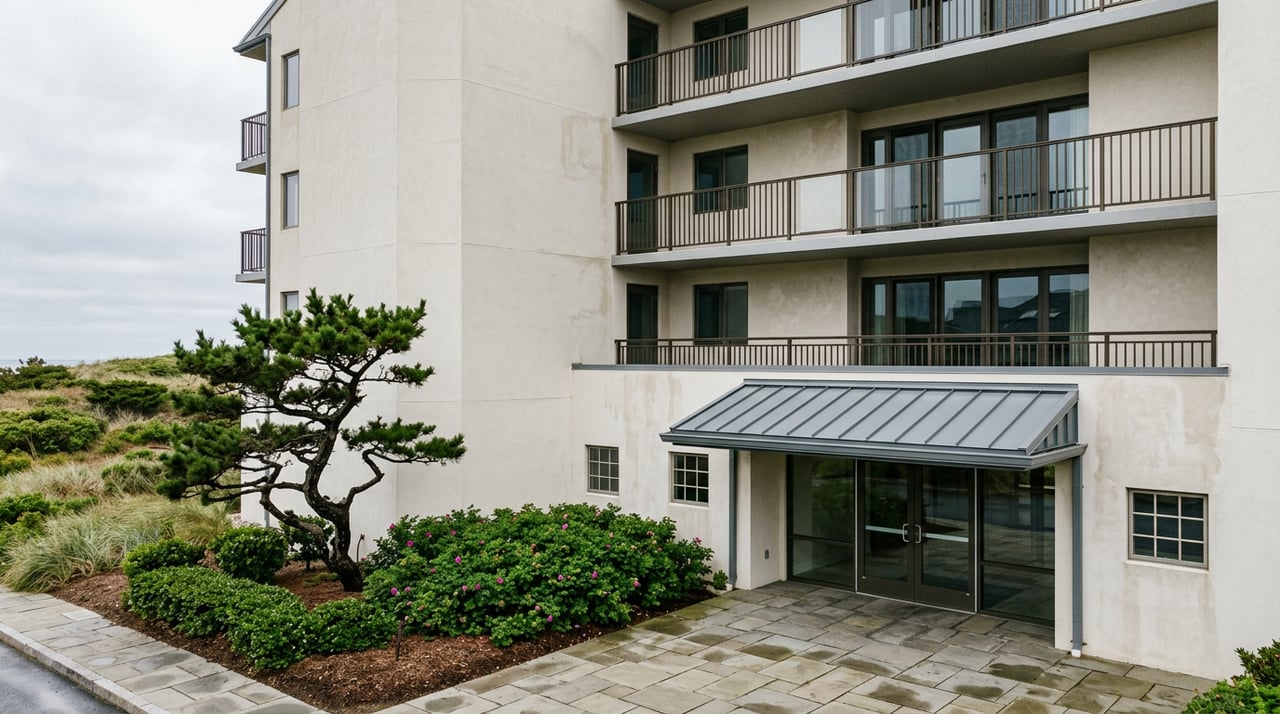
Two condos on the same block in Ocean City can carry nearly identical monthly fees, nearly identical square footage, and nearly identical asking prices, and still sit in completely different markets right now. One can close with a conventional mortgage in six weeks. For the other, buyers may be pushed toward a portfolio loan at a materially higher rate, as Chicago Cooperator News reports. The listing sheet won't tell you which one you're looking at. The building's financial paperwork will.
That split isn't hypothetical anymore. It became real on August 3, 2026, when Fannie Mae retired a financing pathway that a large share of Ocean City's condo transactions have quietly relied on for years. If you're comparing units this fall using median price alone, you're missing the variable that now decides whether your favorite listing is financeable at all.
What Actually Changed on August 3
On March 18, 2026, Fannie Mae issued Lender Letter LL-2026-03, developed in coordination with Freddie Mac and the Federal Housing Finance Agency, updating how condo projects get approved for conventional financing. The most disruptive piece of that letter didn't take effect immediately. It phased in, and the deadline that matters most for anyone shopping in Ocean City right now was August 3, 2026, five weeks before this was written.
That date is when Fannie Mae eliminated the Limited Review process for established condo buildings with more than ten units. Limited Review used to let a lender wave a buyer through with a lighter documentation check if the loan-to-value ratio was low enough and the unit was owner-occupied. That pathway is gone. Every conventional loan application dated on or after August 3 in a building over ten units now goes through Full Review, which means a lender has to evaluate the association's operating budget, its reserve funding history, its master insurance policy, its delinquency rate, any pending litigation, and any special assessments before your loan can close.
Most Ocean City condo buildings are established and most exceed ten units, which means most of the island's condo stock just moved from a lighter underwriting standard to the strictest one Fannie Mae offers. A building that would have sailed through Limited Review with a strong buyer and a big down payment now has to prove its own finances hold up, regardless of who's buying.
Maryland Was Already Squeezing These Same Buildings
Federal underwriting isn't the only pressure on Ocean City reserve funds this year. Maryland passed its own reserve study mandate in 2022 through House Bill 107, requiring condo and homeowners associations statewide to obtain independent reserve studies and update them at least every five years. According to Cowie Law Group, the state legislature followed up in its 2025 session with further reforms to funding obligations, pushing boards from simply having a study on file toward actually funding reserves at the level the study recommends.
The scale of what that has meant for individual buildings is not abstract. One 28-unit Ocean City condo association was projected to need a combined $157,837 a year until 2026 just to bring its reserve fund into compliance, according to Ocean City Today. Property managers who spoke to local reporters described the old rule of thumb, roughly 10 percent of a building's annual budget set aside for reserves, giving way to a new reality closer to 25 to 30 percent once actual reserve studies came back from engineers.
That was the state-level squeeze. A board that was slow-walking its reserve contributions under the old system, hoping to spread the pain over a longer runway, now has a lender looking at its books at the exact moment a sale depends on it.
One Piece of the New Rule Cuts the Other Way
It would be a cleaner story if every part of LL-2026-03 tightened things further. It doesn't. The same letter also retired a rule that made condo buildings non-warrantable if more than half their units were investor-owned rather than owner-occupied. That limit had quietly cut off financing in plenty of downtown and resort markets where non-owner-occupied units are the norm rather than the exception, and Ocean City is exactly that kind of market. A building full of long-term vacation rentals that would have failed the old 50 percent investor-concentration test can now potentially qualify, provided it clears the separate and still-active rule requiring at least half of units to have been conveyed or under contract to primary or second-home buyers at project approval.
So the market isn't simply tightening across the board. It's re-sorting along a different axis. A heavily rental building with a well-funded reserve and clean books might be more financeable today than it was in July. A building that skews owner-occupied but has been underfunding its reserve for a decade is now more exposed than it was in July. Occupancy mix used to be the gatekeeper. Reserve health is now doing more of that work.
Warrantable vs. Non-Warrantable, Side by Side
| Warrantable building | Non-warrantable building | |
|---|---|---|
| Financing available | Standard conventional mortgage | Portfolio loan |
| Typical rate and down payment | Market rate, standard down payment | Higher rate |
| Buyer pool | Full range of financed and cash buyers | Smaller pool of buyers |
| Resale posture | Competes normally against comparable listings | Smaller pool of eligible buyers, longer time to sell |
None of this shows up in a median sale price. Ocean City's condo median has been sitting in the $420,000 to $455,000 range through the middle of 2026, largely flat year over year. That number describes what closed. It says nothing about how many buyers were locked out of a given building before they ever made an offer.
What to Ask For Before You Write an Offer
If you're evaluating a specific unit this fall, the sale price is the least useful number in the file. Before you get attached to a listing, ask for:
- The date of the building's most recent reserve study.
- The funding level the study recommends, and whether the board has actually adopted it. According to Eclipse Communities, a separate change coming January 4, 2027 raises the minimum reserve allocation from 10 percent to 15 percent of budgeted assessment income.
- The delinquency rate among owners. Full Review scrutinizes this directly
- Whether a capital contribution fee applies at closing. Recent closed-sale data covering roughly the second half of 2025 through early 2026 shows this one-time fee, paid directly into the reserve fund, appeared in about 9 percent of Ocean City condo transactions.
- Any pending or recently completed special assessment, and how it was funded.
None of this is a step your lender skips anymore. It's the step your lender is now required to take, and the building's answers, not your credit score, may decide whether the loan happens at all.
Why This Matters Beyond the Closing Table
For an owner comparing a rental unit at La Mirage against one at Solara or a bayside building further north, the reserve study is no longer paperwork you glance at once and file away. It's a leading indicator of whether that unit will be easy or hard to sell three or five years from now, and whether the pool of buyers you're selling into is shrinking or holding steady. For anyone underwriting an Ocean City condo as an income property rather than a place to spend August, financeability at exit is as much a part of the return calculation as this summer's rental numbers.
The mechanism behind Ocean City's condo prices didn't disappear this year. It just moved from the HOA newsletter into the mortgage underwriting file, and it started deciding who gets to buy before the sale price ever gets negotiated.
If you're weighing a specific building, whether as a primary residence, a second home, or an income property, Nimble can walk through the reserve study, the funding plan, and what they actually mean for your financing and your exit before you write an offer. Schedule a consultation to get the building-level picture the median price can't give you.
FAQ
Does this affect single-family homes in West Ocean City? No. LL-2026-03 governs condo project reviews specifically. Detached homes and townhomes that aren't part of a condo association aren't subject to these underwriting standards.
What if I'm paying cash? The financing rule itself doesn't stop a cash purchase. It still matters, because the next buyer down the line may not be paying cash, and a non-warrantable building narrows your eventual resale pool regardless of how you buy today.
Does this apply to FHA or VA loans? No. These changes apply to conventional loans backed by Fannie Mae and Freddie Mac. FHA, VA, and portfolio lenders each maintain their own separate condo approval standards.
This article is general information, not legal, tax or financial advice. Consult a qualified professional about your situation.