Trying to decide between a townhouse and a single-family home in McLean? You’re not alone. With strong demand, convenient commutes, and access to Fairfax County Public Schools, McLean offers both options at different price points. This guide breaks down costs, lifestyle trade-offs, appreciation drivers, and a simple framework to help you choose with confidence. Let’s dive in.
McLean market at a glance
McLean sits just northwest of Washington, DC, with quick access to I-495, Route 123, the George Washington Parkway, and nearby Metro connections. The area blends high-value single-family neighborhoods with clusters of townhouses that offer a lower entry price into the same location and school zones.
Detached homes in McLean often command a premium because land is scarce and many neighborhoods are well established. Townhouses typically offer a more affordable way to enter the market, especially for buyers prioritizing location and commute. For current prices, days on market, and inventory mix, review the latest local MLS data and regional market reports before you start touring.
Costs beyond the mortgage
When you compare a townhouse to a single-family home, look past the purchase price. Your decision should center on your total monthly housing cost and how predictable you want that cost to be.
HOA fees and services
- Townhouses in McLean commonly include an HOA. Typical fees in the region range roughly $200 to $700 per month depending on services and amenities. Communities with pools, clubhouses, or extensive exterior coverage tend to sit at the higher end.
- Many single-family homes in McLean are fee-simple with no HOA. Where HOAs exist for detached homes, fees are often lower unless amenities are included.
- What HOAs often cover: common-area landscaping, trash, snow removal, exterior upkeep in some communities, and contributions to reserves. In condominium-style townhouse setups, the master policy and exterior can be covered by the association.
- What to check: reserve studies, insurance coverage, recent or upcoming special assessments, and any rules on rentals, pets, architectural changes, and parking.
Property taxes
Property taxes in McLean are set by Fairfax County and based on assessed value, which updates annually. Because assessed values are high in this area, the total bill can be significant even when rates are moderate. Look up current tax rates and recent assessments for any property you’re considering to estimate your monthly impact.
Insurance differences
- Townhouse insurance varies by legal structure. In a condominium-style townhouse, the HOA’s master policy covers the building shell and common areas, and you carry an HO-6 policy for the interior and liability. In a fee-simple townhouse, you typically carry coverage similar to a detached home.
- Single-family homes use a standard HO-3 policy covering the structure, certain detached structures, and liability.
- Cost drivers: replacement cost, materials, tree and wind exposure, flood zone status, and claims history. If you are near the Potomac or tributaries, confirm flood maps and any additional coverage needs.
Maintenance and repairs
- A common rule of thumb for single-family homes is to set aside about 1 to 3 percent of the home’s value per year for maintenance and small repairs. Older or high-end properties can exceed that.
- Townhouse owners often see fewer unpredictable exterior bills because some upkeep is managed through the HOA. You still cover interior systems and may face special assessments if reserves are low.
- Practical takeaway: Townhouses shift some variable costs into a fixed monthly HOA. Single-family ownership offers more control and privacy, with larger, less predictable expenses over time.
Utilities and operating costs
Townhouses usually have slightly lower heating and cooling costs because of shared walls and smaller exterior surface area. Single-family homes often have higher utilities and yard-related costs such as irrigation, exterior lighting, and driveway upkeep. Parking can also differ: some townhouses have assigned spaces or community lots, while single-family homes tend to include private driveways and garages.
Lot, privacy, and lifestyle trade-offs
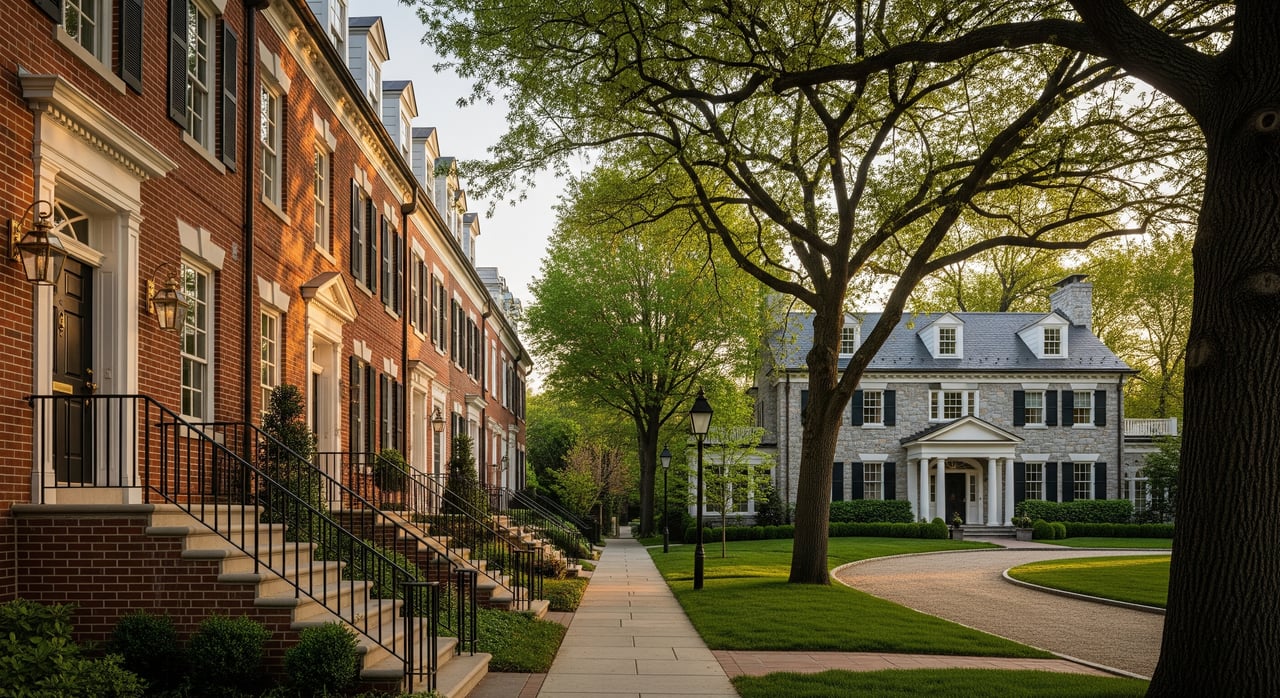
Single-family strengths
- Larger lots with private yards suitable for gardening, pets, and outdoor play.
- More distance from neighbors, which can reduce noise and increase privacy.
- Flexibility to add features like decks, sheds, or pools, subject to zoning and permits.
Townhouse strengths
- Smaller private outdoor areas that are easier to maintain, plus access to shared green spaces.
- HOA-managed exterior work reduces hands-on maintenance.
- Communities may offer amenities such as playgrounds, pools, or clubhouses that you might not have in a standalone home.
Daily life considerations
If you value a quick commute to Tysons or DC, many townhouse clusters sit close to major routes and transit, but there are also single-family neighborhoods with excellent access. Families who prefer private outdoor space usually lean toward detached homes, while buyers who travel frequently or want a simpler maintenance routine often prefer townhouses.
Appreciation and resale in McLean
Detached homes in land-constrained suburbs typically capture a land-value premium that supports long-term appreciation. In McLean’s established single-family neighborhoods, limited new supply can be a tailwind for values.
Townhouses often provide more affordable access to the same school zones and commute options. When affordability becomes a priority for more buyers, well-located townhouses can perform well and maintain a broad buyer pool. New townhouse construction near transit can add options and moderate pricing pressure in some segments, so pay attention to new supply.
For resale, the size and health of your future buyer pool matters. Detached homes appeal to buyers who prioritize land and privacy. Townhouses appeal to buyers who want location and predictability at a lower total cost. HOA governance also plays a role. Strong reserves, clear rules, and well-maintained amenities help support value.
A simple decision framework
Use these steps to compare options side by side.
Start with a budget number
Add up your total monthly cost, not just the mortgage. Include taxes, insurance, HOA fees, and a realistic maintenance reserve.
- For a single-family home, a practical estimate is 1.5 percent of purchase price per year for maintenance, divided by 12.
- For a townhouse, add the HOA fee plus around 0.5 percent of purchase price per year for interior upkeep and upgrades, divided by 12.
Rank yard and privacy
If private outdoor space is a must-have, a detached home likely fits better. If outdoor space is a nice-to-have and you prefer lighter maintenance, a townhouse can align with your lifestyle.
Be honest about maintenance
If you want low-touch living with predictable exterior care, a townhouse with a strong HOA can be a good fit. If you enjoy projects or want full control over your property, a single-family home offers that flexibility.
Think 3 to 10 years out
- Short horizon or potential need to rent later: Review HOA rental policies early and consider townhouse liquidity.
- Longer hold: Detached homes in established McLean neighborhoods often benefit from land-value appreciation over time.
Compare effective monthly cost
- Mortgage payment
- Estimated property tax
- Homeowner’s insurance
- HOA dues, if any
- Maintenance reserve
Focusing on this effective cost helps you compare apples to apples.
Due diligence checklist
If buying a townhouse
- Review HOA financials, reserve study, meeting minutes, and any pending litigation.
- Confirm the master insurance policy type and what the homeowner must cover.
- Check for recent or planned special assessments, rental caps, pet rules, architectural guidelines, and parking policies.
If buying a single-family home
- Review the survey, permit history, and any easements or restrictions.
- Evaluate the age and condition of major systems, the roof, driveway, siding, and fencing.
- Consider landscaping and tree maintenance needs that could influence insurance.
For both property types
- Verify current assessed value and recent tax bills with Fairfax County.
- Check FEMA flood maps, especially near the Potomac or local tributaries.
- Confirm school assignment and commute options.
- Review recent comparable sales in the immediate micro-market.
Financing and insurance tips
- Underwriting: Condominium-style townhouses can face additional lender scrutiny, such as HOA financial health or owner-occupancy ratios. Fee-simple townhouses usually underwrite like detached homes.
- Insurance: Clarify whether the HOA’s master policy is bare-walls or all-in. Align your HO-6 or HO-3 policy with any gaps to ensure proper coverage.
What this means for you
There is no one-size-fits-all answer. Single-family homes in McLean deliver privacy, land, and long-term control, with higher exposure to unpredictable maintenance. Townhouses offer lower entry prices, predictable exterior upkeep, and access to the same location advantages, with less private outdoor space and HOA rules to follow.
If you frame your choice around total monthly cost, lifestyle fit, and your time horizon, you can make a confident decision that aligns with your goals.
Ready to explore what fits your plan in McLean? Schedule a consultation with Ryan Brant to compare real options, run the numbers, and move forward with clarity.
FAQs
What do McLean townhouse HOA fees usually cover?
- Typically common-area landscaping, trash, snow removal, and sometimes exterior maintenance and amenities, funded through monthly dues and reserves.
How do single-family and townhouse resale trends compare in McLean?
- Detached homes often benefit from land-value appreciation over long horizons, while well-located townhouses perform well when affordability drives demand.
Are Fairfax County property taxes high in McLean?
- Bills can be high in absolute dollars because assessed values are high; verify the current rate and property assessment to estimate your monthly impact.
Can I rent out a McLean townhouse later?
- Many HOAs set rental policies or caps; review the association’s rules and financials early if renting is part of your plan.
How much should I budget for maintenance?
- A practical starting point is 1.5 percent of price per year for single-family and 0.5 percent for townhouses plus the HOA fee, adjusted for property age and condition.
What commute and transit options influence value in McLean?
- Proximity to I-495, Route 123, the GW Parkway, and nearby Metro connections supports demand and price resilience for both property types.